Molten Salt Reactor (MSR)
Overview
The Molten Salt Reactor is a much more advanced version of the fission reactor. It uses a molten fissile salt that heats a conductive salt, which then passes through a heat exchanger to produce steam. Major advantage: it cannot melt down.
Required Components


Step 1 — Basic Assembly
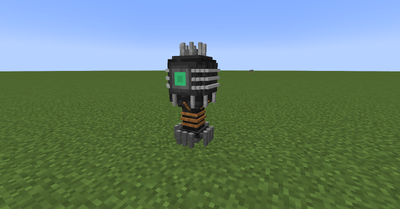
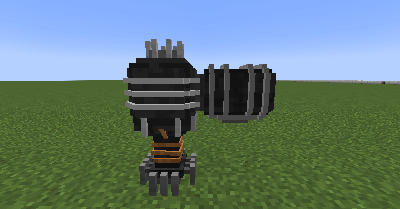
You will need three main components:
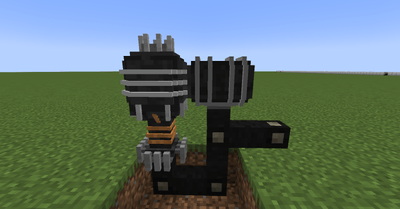
First, place the Freeze Plug, then place the Core on top of it. Facing the green port of the core, place the Molten Salt Supplier so its green port is oriented toward the core's port.
Power Supply
Both the freeze plug and the molten salt supplier require power to operate. Remember to connect them to your electrical grid.
Step 2 — Cooling Salt (FLiNaK)
Unlike the fission reactor, the MSR is not water-cooled. It uses FLiNaK salt provided via the freeze plug.
- The salt is not consumed — you do not need to refill it.
- The more salt you add, the more heat the reactor can dissipate.
Step 3 — Fissile Fuel (LiF-ThF4-UF4)
The fuel for the MSR is LiF-ThF4-UF4 salt. Place the pellets into the Molten Salt Supplier to melt them.
| Property | Value |
|---|---|
| Volume per pellet | 250 mB |
| Core Capacity | 1,000 mB |
| Consumption | Progressive (hotter = faster) |
Warning — Waste
Fissile salt produces waste which is collected by the supplier. Remember to empty it regularly to prevent operational blockages.
Step 4 — Heat Circuit
To dissipate heat from the conductive salt, you need:
- VS-Ceramic Pipes — connected to the top of the core.
- Heat Exchanger — placed in a 5×5×2 water pool.
Pipe Length
The longer the VS-Ceramic pipe, the more heat it dissipates before reaching the exchanger. Keep the circuit as short as possible to maximize efficiency.
MS Control Rod
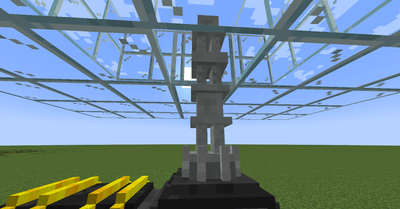
To reduce fuel consumption, attach an MS Control Rod to the side of the core. Operation is identical to the fission reactor.
Safety Advantage
Unlike the fission reactor, the MSR cannot melt down. However, excessively high temperatures will accelerate fuel consumption.